

VillageMED is a non-profit organization which provides healthcare services to children in Haiti through their mobile clinics.
PROBLEM
All patient records are on paper at present, which makes it difficult to maintain and go back to it.
Also, during the process of treatment in their mobile clinics, the paper travels from one person to the other. This makes the process cumbersome and slow resulting in long hours of waiting for the patients.
It is a tedious task for healthcare providers and volunteers as the number of patients on a day are usually very high.
REQUIREMENT
VillageMED’s primary requirement was to have an Electronic Medical Record System to make their process digitally accessible and easier to maintain.
PLAN OF ACTION
- To understand the current process of the VillageMED team in detail from each stakeholder.
- Know their expectations, requirements, pain points and find out opportunities that can serve them better.
- Analyze all the data collected in research
- Design a system that meets their actual needs.
DESIGN PROCESS

My Role: Analysis, Prototyping, UI Design, Testing
Users: VillageMED staff and volunteers are direct users of the system. Half of them from the US and others from Haiti.
USER RESEARCH

ANALYSIS
Through user interviews conducted by my project partner, I got detailed information about the VillageMED process and users. We created affinity diagrams of all the data collected and derived conclusions about the system as a team.

RESULTS
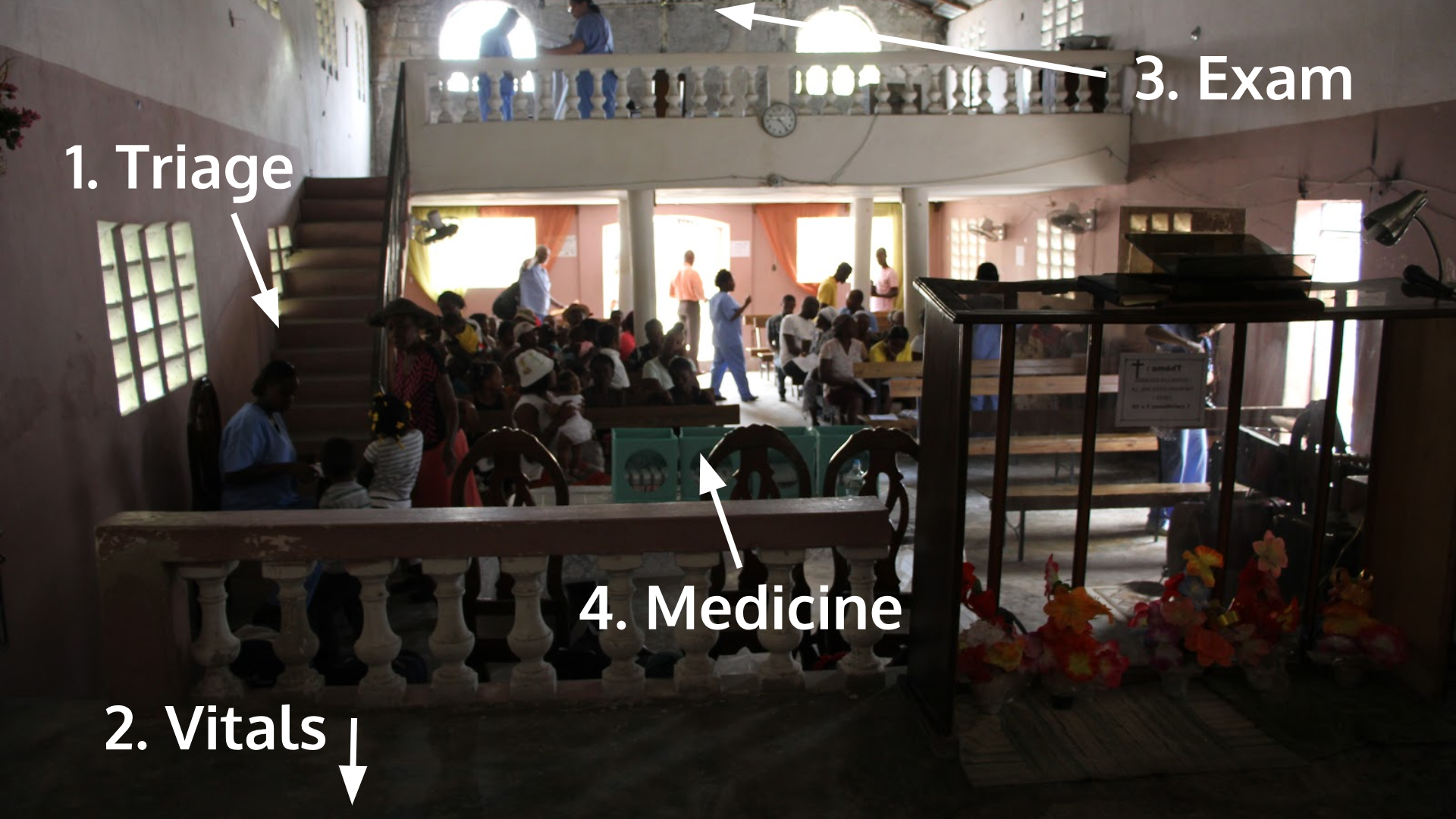
We were able to understand the current process of VillageMED and map it to the users involved in the whole system.

We found that it is a very dynamic environment, and not a proper clinic. So our conclusion was that tablet devices would be better suited for user needs.
DATA COLLECTED DURING VISIT
- 1st Set (Demographics): picture of the patient, patient name, guardian’s name, contact/guardian’s contact info (cell/email), patient age, patient sex
- 2nd Set (Vitals): vital signs (temperature, pulse, RR, BP, weight; general questions about the reason for visit, medication/treatment at the time of visit
- 3rd Set (Physical Examination): Review of Symptoms (ROS)
- 4th Set (Final Assessment): Assessment, Treatment Plan, Medicine Dispensed, Physician signature
By looking at the type of data they want to collect at different stages, we came to a conclusion that a customized mobile application (for tablets) would be the right solution for VillageMED instead of a traditional EMR system.
PROTOTYPING
I mapped the user flow with the application in order to create prototypes.
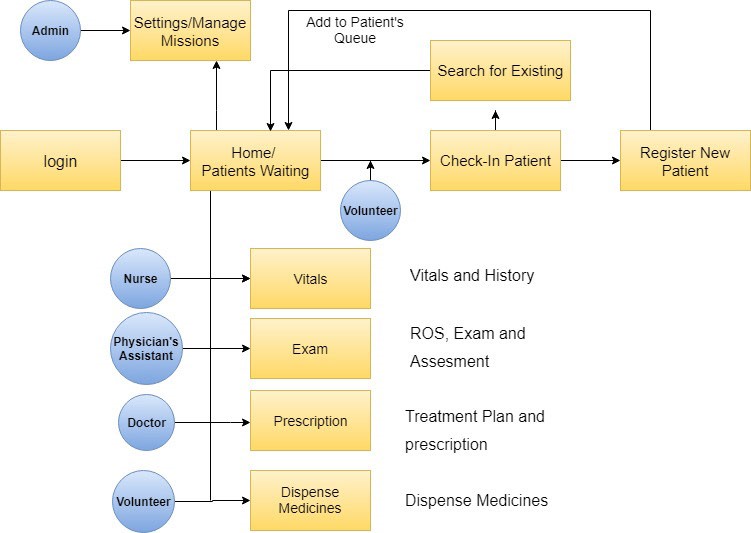
This led to the beginning of prototyping, I created paper prototypes followed by further iterations of low fidelity wireframes using Adobe XD.

USER TESTING
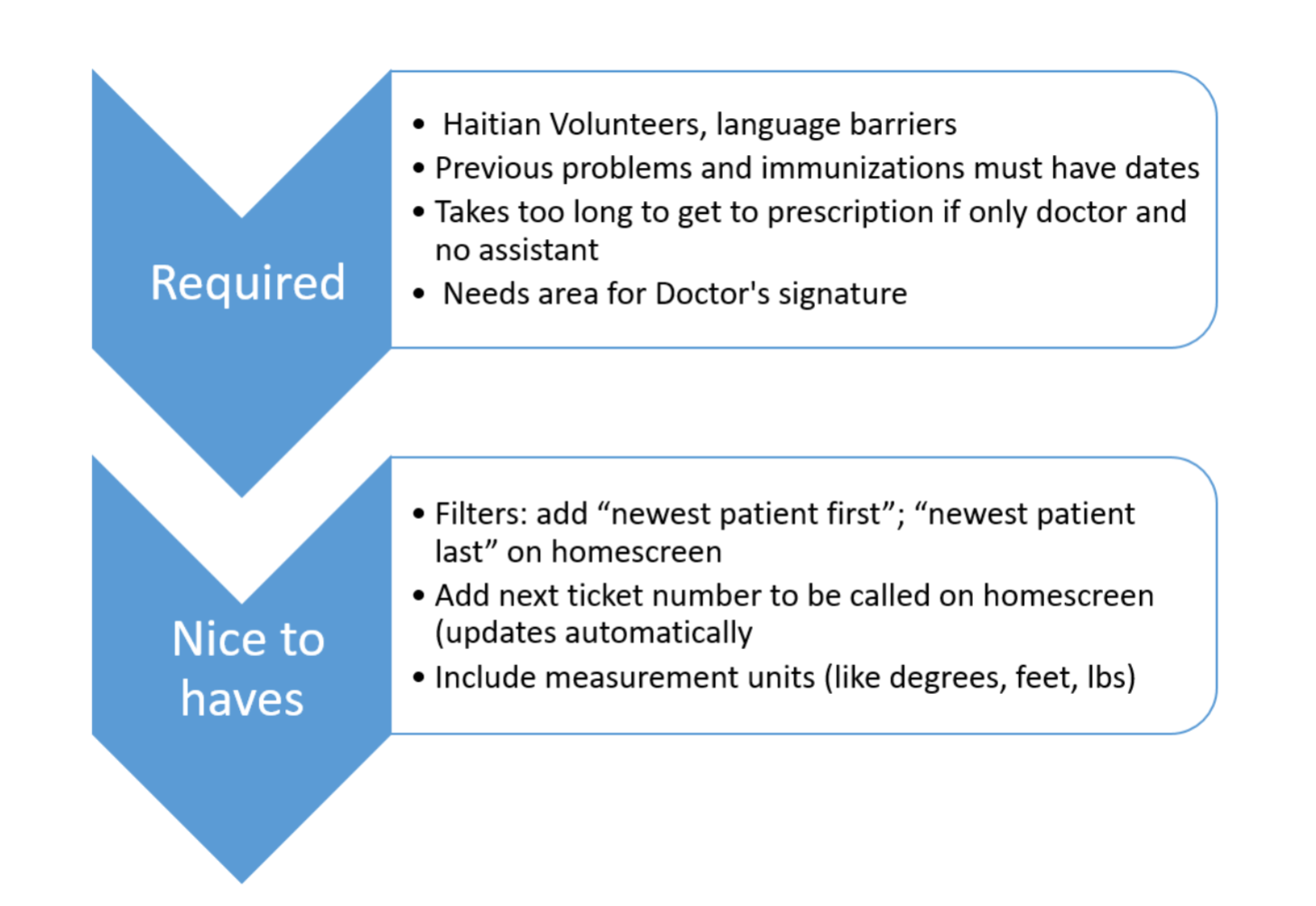
First, medium-fidelity prototypes were tested with the users on site. We got some interesting feedback from that process.
KEY TAKEAWAYS
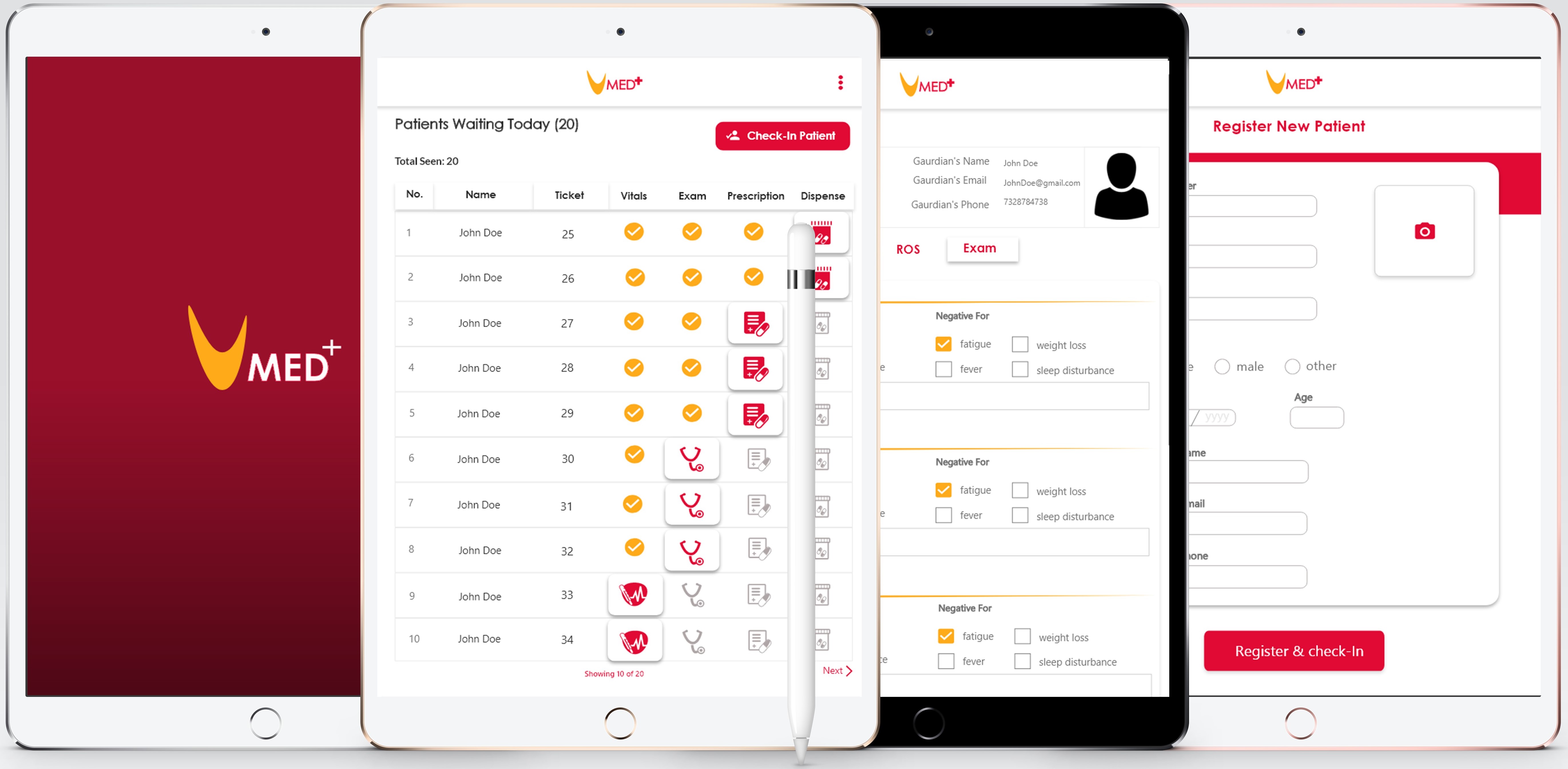
UI DESIGNS
Based on the user testing insights, I updated the prototypes and came up with high fidelity designs through further iterations.
FINAL THOUGHTS
This project gave me the opportunity to do in-depth user research, analysis and dive deeper into prototyping and designing elements for data collection. The most challenging part was making a system similar to EMR but as simple as possible for the changing roles at VillageMED.
 Damini Bhatt